
Introduction
Types of musical instruments help us understand how music is created using different sound-producing methods. Every instrument produces sound in a unique way, allowing musicians to express rhythm, melody, and harmony. From traditional acoustic tools to modern digital devices, musical instruments play an essential role in every culture and music genre around the world.
In this beginner-friendly guide, you will learn about the main types of musical instruments, how they work, and examples of each instrument family.
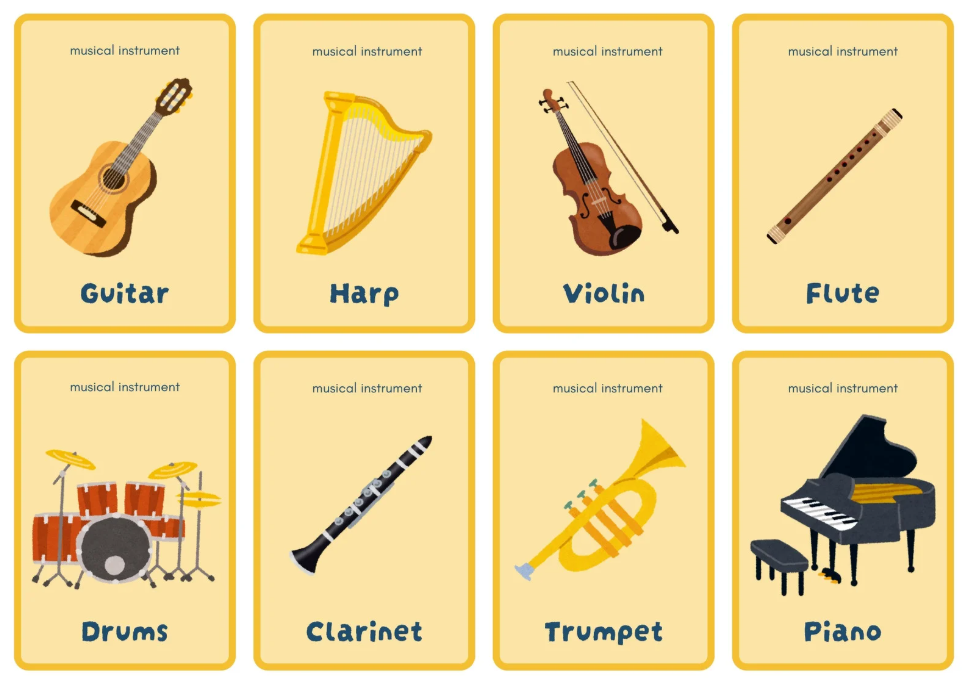
What Are Musical Instruments?
Musical instruments are devices designed to create musical sound through vibration, air movement, strings, membranes, or electronic signals. Learning about the types of musical instruments helps students and music lovers recognize sounds and understand how compositions are built.
Each instrument belongs to a specific category based on how sound is produced.
Types of Musical Instruments Explained
1. String Instruments
String instruments create sound through vibrating strings. The pitch changes depending on string length, thickness, and tension.
Examples:
- Guitar
- Violin
- Cello
- Harp
- Sitar
These instruments are played by plucking, bowing, or striking the strings.
2. Wind Instruments
Wind instruments produce sound when air vibrates inside a tube. Musicians control pitch using holes, keys, or valves.
Examples:
- Flute
- Clarinet
- Saxophone
- Trumpet
- Harmonium
They are commonly divided into woodwind and brass categories.
3. Percussion Instruments
Percussion instruments produce sound when struck, shaken, or tapped. They mainly provide rhythm and timing in music.
Examples:
- Drums
- Tabla
- Cymbals
- Xylophone
- Dholak
Some percussion instruments create musical notes, while others focus on rhythm.
4. Keyboard Instruments
Keyboard instruments are played using keys that activate strings, air flow, or electronic sounds.
Examples:
- Piano
- Organ
- Electronic keyboard
- Accordion
These instruments are widely used in classical, pop, and film music.
5. Electronic Instruments
Electronic instruments generate sound using digital technology and electronic circuits. They are important in modern music production.
Examples:
- Synthesizer
- Digital piano
- Drum machine
- MIDI controller
Modern producers often combine electronic and acoustic instruments to create new musical styles.
Why Learning Types of Musical Instruments Is Important
Understanding the types of musical instruments offers many benefits:
- ✅ Helps beginners choose the right instrument
- ✅ Improves music theory knowledge
- ✅ Makes it easier to recognize sounds in songs
- ✅ Builds a strong foundation for music education
You can also read our related guide:
What Is Instrumental Music?
Musical Instruments in Modern Music
Today’s music blends traditional instruments with digital technology. Film soundtracks, live performances, and studio recordings combine strings, percussion, keyboards, and electronic sounds to produce rich musical experiences.
Because of technology, learning instruments has become easier through online lessons and virtual music tools.
Conclusion
The different types of musical instruments form the foundation of music creation. Whether sound comes from vibrating strings, moving air, rhythmic percussion, or electronic synthesis, each instrument contributes its own character to music.
By understanding these instrument families, beginners and music enthusiasts can better appreciate how music is performed, composed, and enjoyed across cultures worldwide.